Most visitors see Coiba as a snorkeling paradise. Fewer know that the park is also one of Central America's most important scientific laboratories — with a permanent research station, resident biologists and a research agenda that reaches far beyond Panama.
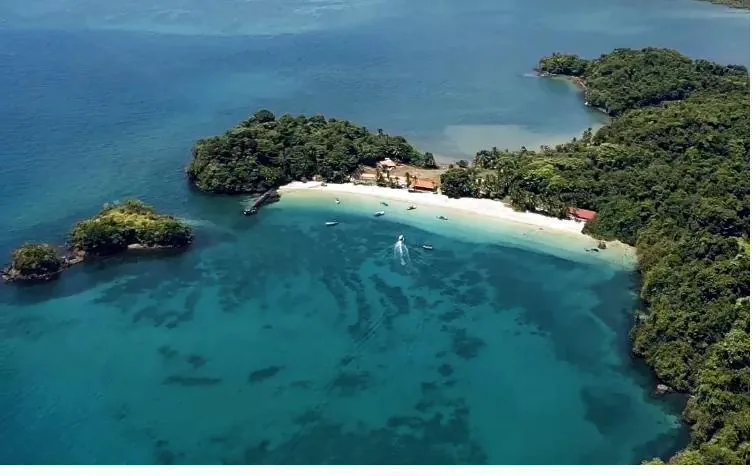
The Coiba AIP Scientific Station
The Estación Científica Coiba AIP is a research centre created by Panama's National Secretariat of Science, Technology and Innovation (SENACYT). Its purpose is to promote and carry out projects devoted to studying, protecting and conserving the marine and terrestrial biodiversity of Coiba National Park and its surrounding special marine protection zone. The station began operating in January 2018, and Panama's Ministry of Environment later signed a formal cooperation agreement with it, inaugurating the first equipped "living laboratory" with supplies and dormitories for visiting scientists.
What scientists are actually studying
The station runs multiple parallel research lines. A few real examples from its published programme:
- Sea anemone diversity in Coiba National Park (Cnidaria, Anthozoa, Actiniaria).
- Scenic and ecosystem assessment of the park's beaches — the first study of its kind for Coiba.
- Pre-Columbian fishing traditions of the Coiba archipelago's ancestors, and prehispanic navigation between island societies.
- Coastal climate-risk management in the park's buffer zone.
- Zooplankton oceanography — building the first taxonomic list of copepods ever compiled for the park.
Work on whale shark genetics has also been carried out in collaboration with Dr Héctor Guzmán of the Smithsonian Tropical Research Institute, improving what we know about the genetic connectivity of the whale sharks that visit Panama's Pacific — Coiba's archipelago in particular.
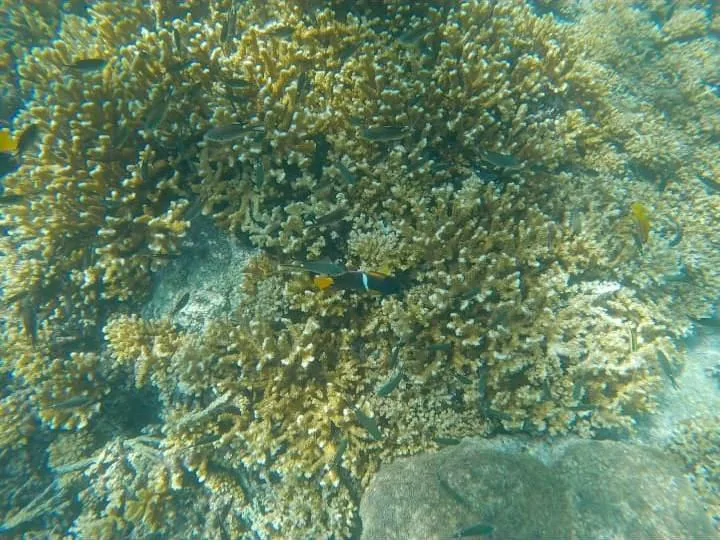
The Smithsonian's field station on Ranchería
You'll actually see the second research base on our tour. Coibita — the island we call Ranchería, where we stop for lunch — hosts a Smithsonian Tropical Research Institute field station. Coibita is the third largest island of the park, and Coiba National Park includes Coiba Island (2,701 km²) plus 2,165 km² of ocean. STRI notes that most of the densely forested main island has never been logged and that the park's marine life is protected from industrial fishing.
A detail that says a lot about the place: the field station has no dock, so boats are loaded from a white carbonate sand beach, and it uses a five-mooring system to protect the sea floor from anchor damage.
Why this matters for your visit
When your guide explains why we never anchor on coral, why the park limits daily visitors, or why touching a turtle is prohibited, those rules aren't arbitrary — they come from decades of research happening a few hundred meters from where you snorkel. Visiting Coiba responsibly means becoming part of that protection effort.
See the living laboratory yourself
Our Coiba Island Tour stops at the park's visitor centre and at Ranchería, and our guides know the science behind what you're seeing. Book your tour ($65/person + park fee).