Few moments underwater compare to a spotted eagle ray "flying" past you in slow motion. In Coiba National Park, rays are regular stars of our snorkel tours — here's which species you'll see, where, and how to enjoy them respectfully.
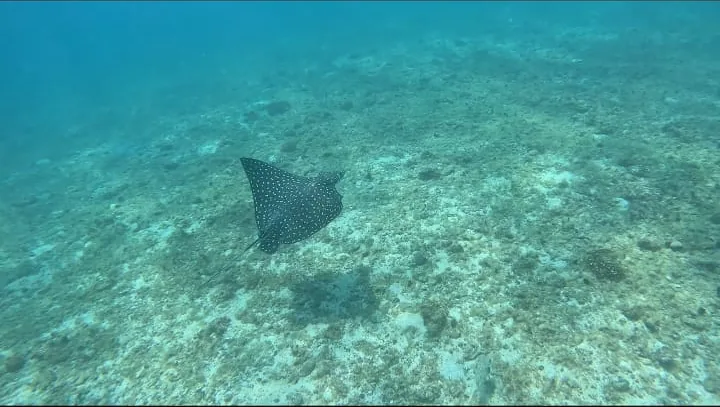
The spotted eagle ray: Coiba's elegant flyer
With its dark back covered in white spots and a wingspan that can pass two meters, the spotted eagle ray is the most striking ray in the park. They glide over the sandy channels between the reefs at Coco Grande and Coco Pequeño, hunting small mollusks buried in the bottom. They're completely peaceful — they simply carry on with their day while you float above in awe.
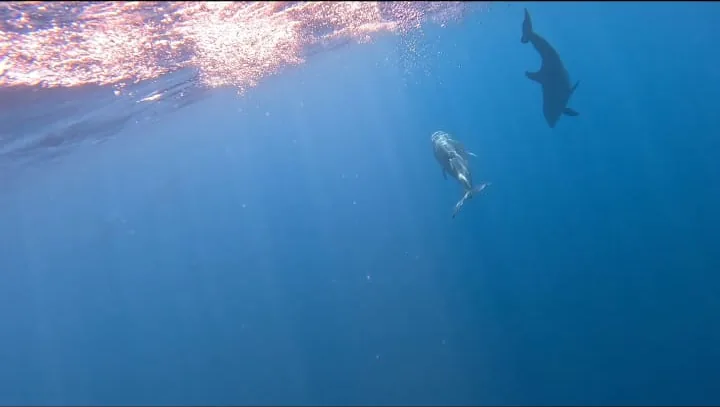
Other rays you might meet
- Southern stingrays — often half-buried in the sand, visible by their outline and eyes.
- Devil rays (mobulas) — occasionally seen in open water, sometimes leaping spectacularly near the boat.
- Round stingrays — small and shy, in the shallows.
Are rays dangerous?
No — rays only use their defenses if stepped on or grabbed. Snorkeling above them is completely safe. Our simple rules: keep a respectful distance, never touch or chase, and do the "stingray shuffle" (slide your feet) if you ever walk on sandy bottoms.
Where and when to see them
Rays live in Coiba all year round. Our guides know the sandy channels they patrol, and eagle rays appear on a large share of our tours — the photos in this article were all taken on regular tour days. Ready to look for your own? Book the Coiba Island Tour ($70/person + park fee).