Long before you reach the first reef, something usually happens that no brochure can promise: a pod of dolphins finds the boat. They ride the wake, leap alongside, and sometimes appear beneath you while you snorkel. Here's everything about the dolphins of Coiba National Park — and why they show up so often.
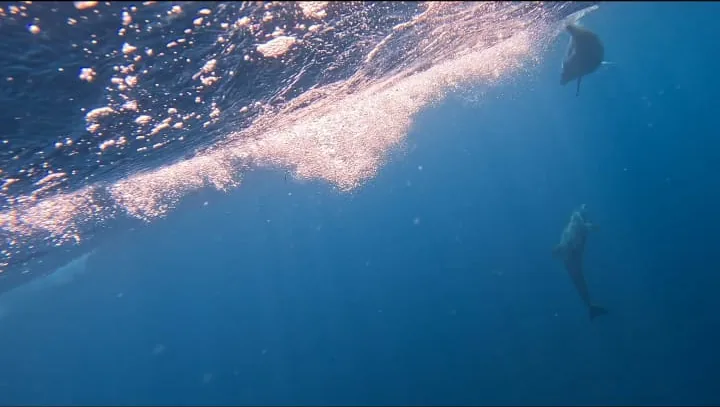
Which dolphins live here?
The Gulf of Chiriquí is dolphin country all year round. The three you're most likely to meet:
- Pantropical spotted dolphins — the most common. They travel in large, fast pods and love a boat wake.
- Spinner dolphins — smaller and acrobatic, famous for leaping and spinning in the air.
- Bottlenose dolphins — bigger, calmer, often in small family groups near the islands.
Why they follow the boat
It isn't feeding and it isn't training — it's physics and play. The wave a boat pushes gives dolphins a free ride, the same way a surfer uses a swell. They join because they want to, and they leave when they've had enough. That's exactly why the moment feels so honest.
How often will I see them?
On most crossings — but never guaranteed. Dolphins are wild and follow the fish, not our schedule. Some mornings we meet three pods; other days none. What we can promise is that our captain knows where they usually feed and will always slow down and let them approach on their own terms.
Watching them the right way
- Never chase. Panamanian regulations require boats to keep a respectful distance and never cut across a pod.
- Engine down, not up. Our captains reduce speed rather than pursue.
- No swimming after them. If they come to you while snorkeling, that's their choice — a gift, not a target.
- Film wide. A GoPro on a wide setting catches far more than zooming ever will.
Dolphins and whales together
From June to October, dolphin sightings overlap with humpback whale season — meaning one boat ride can bring you spotted dolphins racing the bow and a mother whale with her calf in the distance. If that's your dream trip, read our best time to visit guide first.
Come meet them
Every Coiba Island Tour crosses their waters twice — once on the way out, once on the way home. Book your tour ($65/person + park fee) and keep your camera ready from the moment we leave the beach.