The most common message we get on WhatsApp isn't about prices or whales. It's this: "I want to go, but I can't really swim." So let's answer it properly — because the honest answer is that you can absolutely snorkel in Coiba without being a swimmer, and people do it here every single week.
Why the life vest changes everything
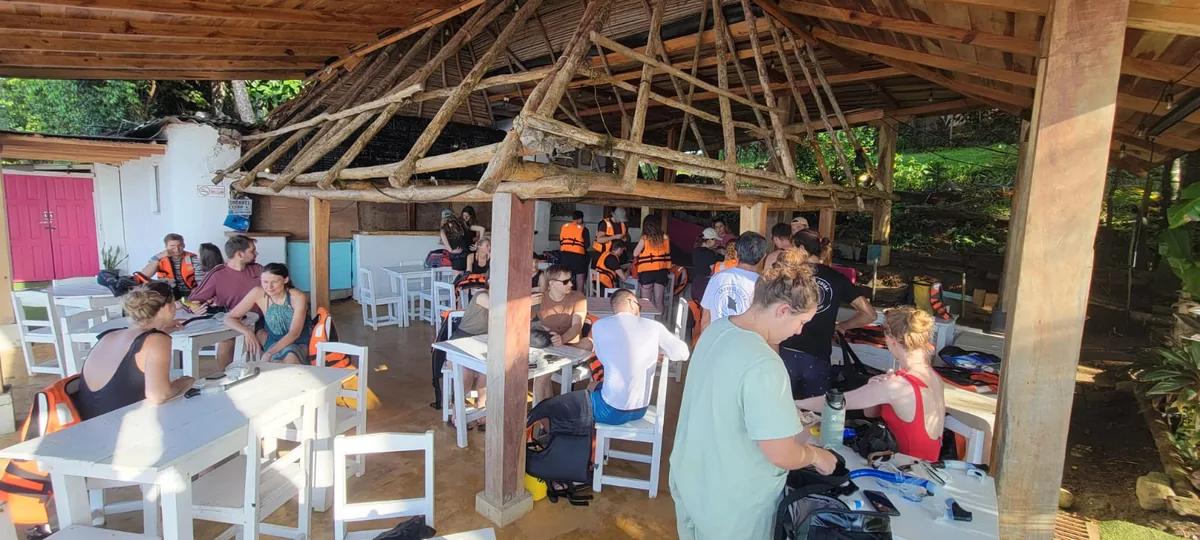
This is the part most people don't picture. Snorkeling isn't swimming — you're not propelling yourself anywhere. With a life vest on, you float on the surface without doing anything at all. Your face is in the water, you breathe normally through the tube, and you look down. That's it. The vest does the work; you just watch the show.
Every guest on our boats gets a vest, and non-swimmers keep theirs on the whole time. Nobody is asked to take it off, and nobody is judged for wearing one.
What actually happens, step by step
- Before we leave: a full briefing in English or Spanish — how the mask seals, how to clear water from the snorkel, hand signals, and where the guide will be.
- At the first stop: we don't drop you in the deep end. You enter from the boat with the vest on, and the guide is in the water first, waiting.
- In the water: beginners stay in a small group with the guide. If you tell us you're nervous, a guide stays beside you the entire time — that's normal, not a special favour.
- If you don't like it: you get back on the boat. No pressure, no lost day. The island stops, the beach and the boat ride are worth it on their own.
The three problems beginners actually have
Not sharks. Not depth. These:
- A leaking mask. Almost always hair caught under the seal, or the strap too tight. Ask the guide to refit it — 10 seconds and it's solved.
- Fogging. Spit in the mask, rub it around, rinse in seawater. It sounds like a joke; it's what everyone on the boat does.
- Breathing too fast. Totally normal in the first two minutes. Hold the boat ladder or a float ring, put your face in, and just breathe until it feels boring. It will.
How deep is it, really?
The reef stops we use are shallow — roughly 2 to 8 meters. But here's the thing: depth is irrelevant when you're floating on top. You could be over 100 meters and the experience is identical. What matters is visibility, and on a calm day in Coiba you can see 15 meters ahead of you.
Kids, older travelers, and nervous partners
Children snorkel beside a parent or guide with a vest on. Older guests do fine — again, no swimming required. If one person in your group is anxious about the water, a private boat lets the guide give them full attention while everyone else explores. More on families here: Coiba With Kids.
What to tell us when you book
Just say it plainly: "I can't swim" or "first time snorkeling." It changes nothing about your price and everything about how we look after you. Message the team when you book your Coiba tour — the Coiba Island Tour is $70/person + park fee, gear and lunch included.
Still worried about what's in the water? Read Is Coiba Safe? — the honest version.