Everyone comes to Coiba for what's under the water. Then, halfway through lunch on the island, a flash of red crosses the sky and the whole group looks up: wild scarlet macaws, flying free over one of their last strongholds in Panama.
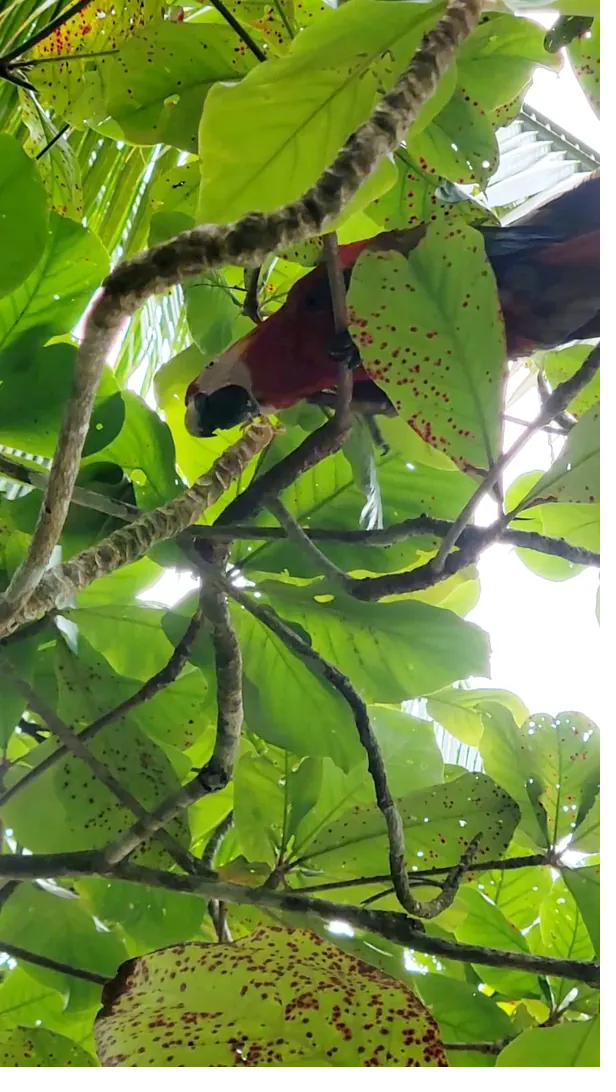
Why Coiba is a scarlet macaw sanctuary
On most of the Panamanian mainland, scarlet macaws (Ara macao) have nearly disappeared due to habitat loss and the pet trade. Coiba is different: 85 years as a penal colony kept the island's forest almost untouched, and today it protects one of the largest wild scarlet macaw populations in the country. The photo above was taken by one of our guides on a normal tour day — the birds feed in the almond trees right around the visitor area.
173+ species on one island
Coiba National Park is home to more than 173 bird species, including:
- Scarlet macaws — usually in noisy pairs, easiest to spot around the ranger station and beaches.
- Coiba spinetail — an endemic species that exists nowhere else on Earth.
- Crested eagles — one of the rarest raptors in the Americas.
- Magnificent frigatebirds — the black silhouettes that escort the boat on the crossing.
- Brown pelicans, boobies and ospreys — diving for fish over the same reefs you snorkel.
Do I need a special birding tour?
No — that's the best part. Macaws, frigatebirds and pelicans appear naturally during our regular Coiba Island Tour ($65/person + park fee). We stop on the island for lunch and the visitor trail, which is exactly where the macaws like to feed. Serious birders can also arrange a private tour and ask the guide to build in more land time.
Best time of day and season
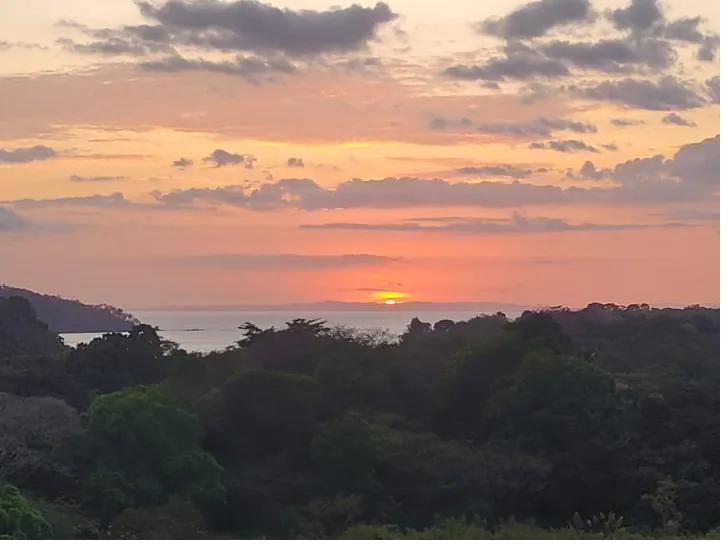
Birds are most active early in the morning — good news, because tours leave Santa Catalina around 7:30–8:00 AM. Macaws are present all year; the dry season (December–April) gives clearer skies, while the green season (May–November) means lusher forest and more fruit on the trees they feed in.
Bring your camera with a zoom lens if you have one, keep your voice low near the feeding trees, and never offer food to wildlife. Ready to meet them? Book your Coiba tour with Snorkel Coiba — gear, lunch and a wildlife-savvy guide included.