Tourism sites throw big numbers at Coiba, and they don't always agree with each other. So we went to the primary sources: UNESCO's official inscription file and the Panamanian law that created the park. Everything below is quoted from those, and you can check every line yourself at the links at the bottom.
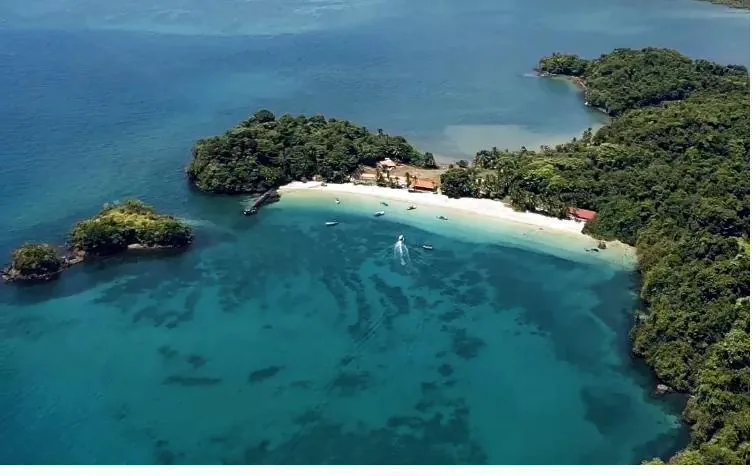
The size
- 270,125 hectares — the World Heritage property itself (Coiba National Park).
- Of that, 216,500 ha are marine and 53,625 ha are insular.
- 160,700 hectares — the Special Zone of Marine Protection acting as a buffer.
- Combined, the boundaries encompass 430,825 hectares, of which 377,064 ha are marine.
Worth pausing on that: Coiba is overwhelmingly a marine park. The famous island is the small part.
The islands
The property protects Coiba Island plus 38 smaller islands and islets, along with the surrounding waters of the Gulf of Chiriquí, spanning the provinces of Veraguas and Chiriquí.
The biodiversity
These are UNESCO's figures, from the Outstanding Universal Value statement:
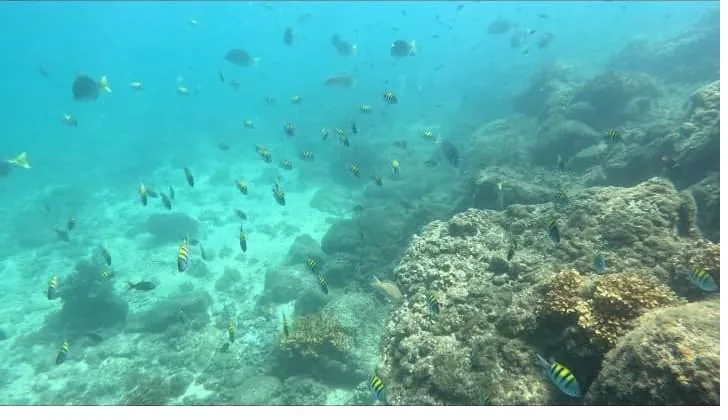
- 760 species of marine fishes
- 33 species of sharks
- 20 species of cetaceans (whales and dolphins)
UNESCO also notes that Coiba's islands are the only group of inshore islands in the tropical eastern Pacific with significant populations of trans-Pacific fishes — Indo-Pacific species that established themselves on this side of the ocean.
Why it was inscribed
Coiba was added to the World Heritage List in 2005 under natural criteria (ix) and (x).
Criterion (ix) recognises that despite the short evolutionary isolation of the Gulf of Chiriquí islands, new species are still being formed — the endemism levels in mammals, birds and plants make the property an outstanding natural laboratory for research.
Criterion (x) recognises the biodiversity, and states plainly that Coiba Island is the last refuge for species that have largely disappeared from the rest of Panama — specifically the crested eagle and the scarlet macaw. That's not a tour operator's claim; it's the inscription text. More on those birds: The Birds of Coiba.
The legal backbone
- Resolution No. 021 (1991) of the National Authority of the Environment created the National Park.
- National Law 44, signed by Panama's Legislative Assembly on 26 July 2004, established Coiba National Park and its Special Zone of Marine Protection, defining the boundaries and the management rules for both.
That 2004 law mattered enormously: UNESCO had deferred the nomination in 2004 pending exactly this legislation. Panama passed it, and inscription followed in 2005.
What UNESCO says the threats are
The official statement is candid. It names illegal fishing, introduced species, infrastructure development, and — relevant to every visitor — it states that tourism interest is growing rapidly and that tourism activities “need to be monitored and managed so as to prevent significant impacts”. Climate change effects including coral bleaching are also listed.
In practice that means the park entrance fee you pay, the mooring rules, the group sizes and the ranger station aren't bureaucracy. They're the mechanism keeping those 760 fish species where they are.
Seeing it for yourself
Day tours from Santa Catalina reach the park in about an hour. The Coiba Island Tour is $70/person plus the park entrance fee, with three snorkel stops, the ranger station and lunch included. Costs explained here: How much does a Coiba tour cost?
Or ask our team directly — we're based in Santa Catalina and we go every week.
UNESCO World Heritage Centre, “Coiba National Park and its Special Zone of Marine Protection”, Outstanding Universal Value statement — whc.unesco.org/en/list/1138
Republic of Panama, National Law 44 of 26 July 2004; Resolution No. 021 (1991), National Authority of the Environment.